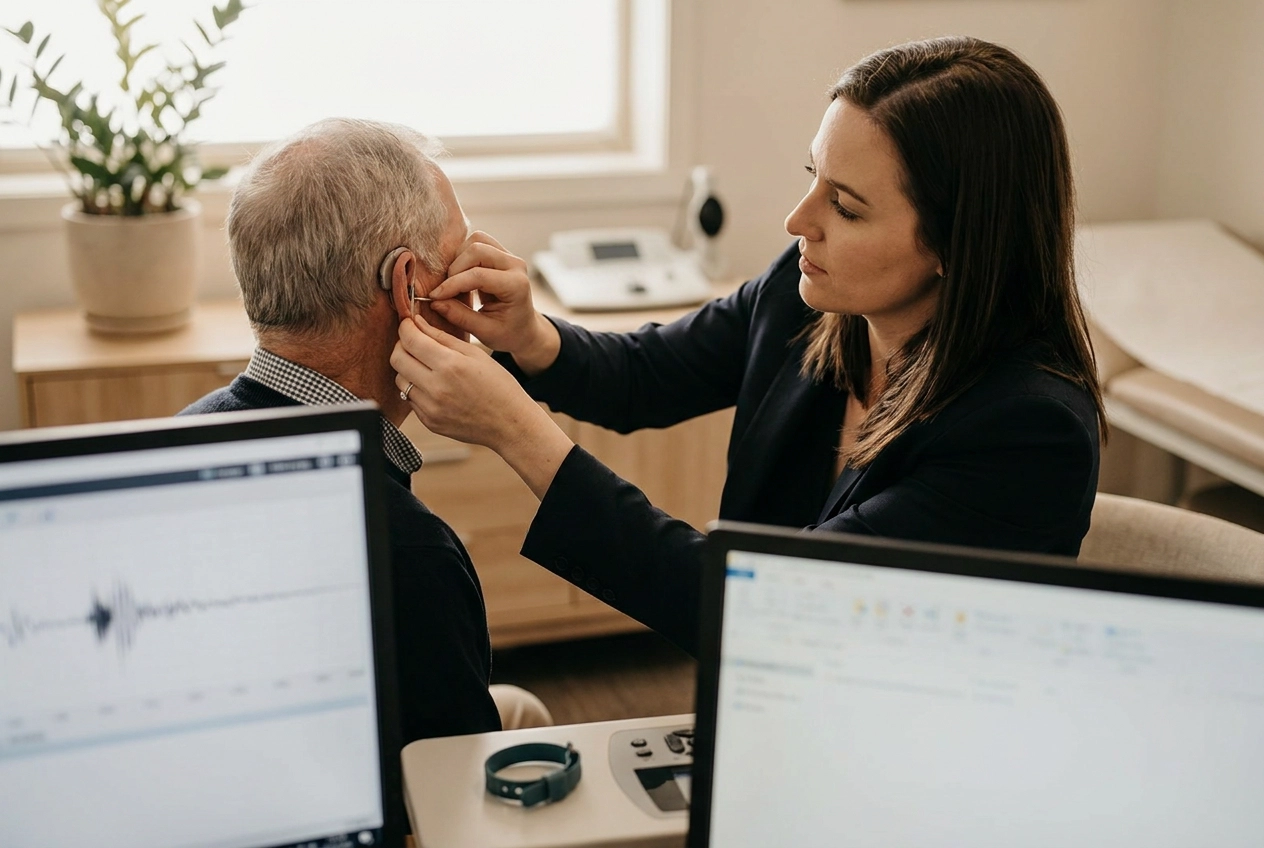
A hearing aid is a small sound system with a prescription attached. Programming it from your audiogram is the starting point, not the finish line. Real-ear measurement is the step that checks what the device actually delivers to your eardrum — and it is one of the clearest differences between a hearing aid that is switched on and one that is fitted.
This article is general education. It is not a diagnosis or a treatment recommendation, and it is no substitute for an individual hearing evaluation with a licensed audiologist.
What real-ear measurement actually measures
A thin, soft probe tube is placed in your ear canal, next to the hearing aid. The hearing aid then produces sound — tones, or speech — and the probe microphone measures the level reaching your eardrum. The audiologist compares those measured levels with a target that was calculated for your specific hearing loss.
Speech mapping is the same idea using speech instead of tones: live voice or recorded speech is played while the probe measures what arrives at your eardrum. Because speech is the sound most people want to hear better, speech mapping shows the fit in the terms that matter most day to day.
Why your ear is not a template
Ear canals differ in length, width and shape. Those differences change how sound behaves: a smaller canal can make the same setting louder, a larger one can make it quieter, and a vented or open fitting changes low-frequency sound. This is why two people with the same audiogram may need different settings — and why software predictions are a starting point rather than an answer.
What a verification appointment looks like
The probe tube is placed, the hearing aid is worn, and you sit quietly while measurements are taken. Sounds are played at several levels, from soft to loud. The audiologist then adjusts the programming and measures again, repeating until the measured output is close to target. You may be asked how things sound along the way, because verification and your own listening experience are both part of the picture.
What it can and cannot tell you
Verification confirms the acoustics: that the sound reaching your eardrum matches what was intended for your hearing loss. It cannot predict how quickly your brain will adapt to amplified sound, and it does not replace counselling, realistic practice in noisy places, or follow-up visits. Comfort, dexterity, and how often you wear the devices also shape the outcome.
Why a hearing evaluation comes first
Hearing loss has many causes, and some need medical attention rather than amplification. A comprehensive evaluation — case history, otoscopy, pure-tone testing, speech testing and tympanometry — is what tells a licensed audiologist whether hearing aids are appropriate and how they should be configured. If you notice persistent ringing, one-sided hearing change, sudden hearing loss, or ear pain or discharge, contact a clinician promptly.
Sources
National Institute on Deafness and Other Communication Disorders (NIDCD), Hearing Aids
U.S. Food and Drug Administration (FDA), consumer information on hearing aids
American Academy of Otolaryngology–Head and Neck Surgery (AAO-HNS), patient information on hearing loss and hearing aids
Movac Hearing provides comprehensive hearing evaluations, prescription hearing-aid selection, fitting and programming, and follow-up care in Weston, Florida, in English and Spanish. An individual evaluation is the only way to know what is right for your ears; please call to schedule one.
Need advice for your own hearing?
An online article cannot diagnose hearing loss or recommend a device for an individual.
Prefer to talk first? Call (754) 290-3270.