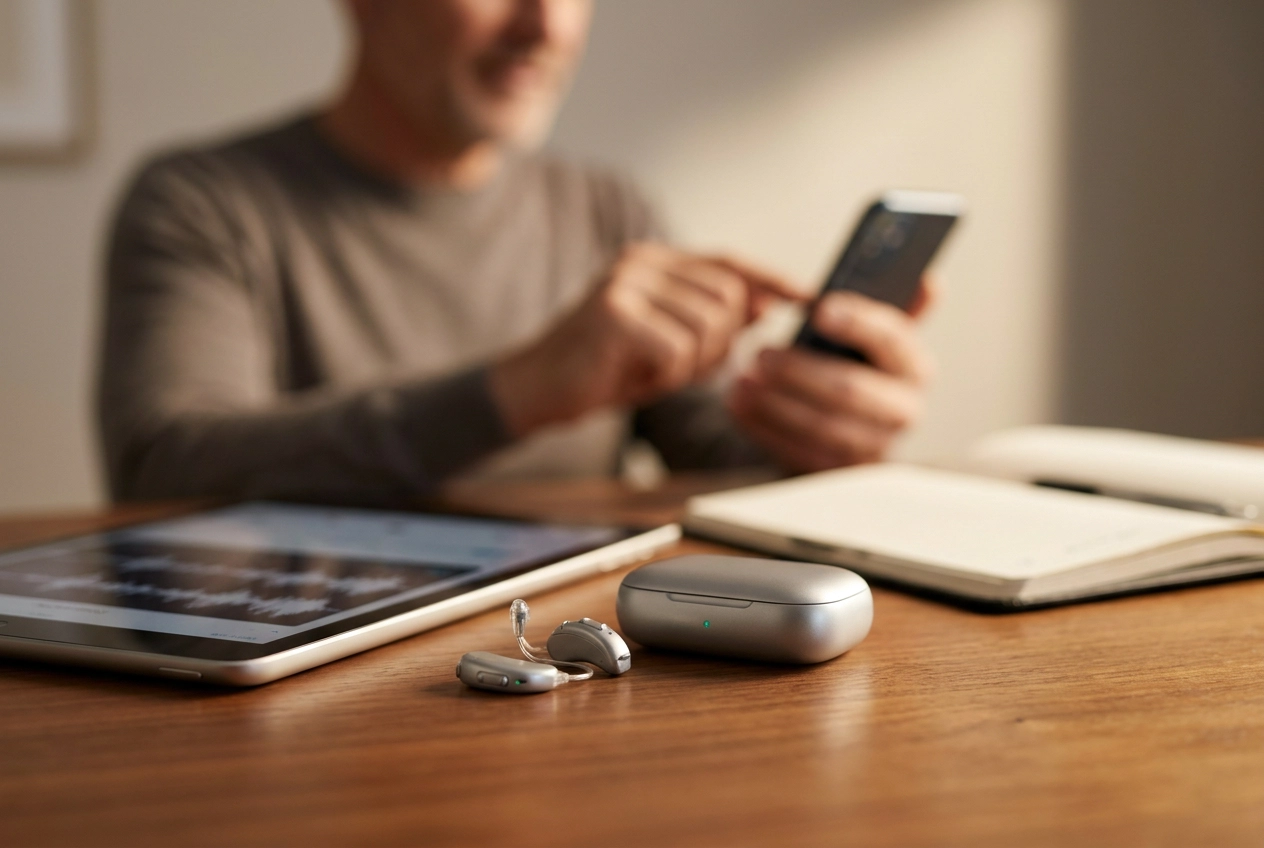
Hearing-aid technology is easier to understand once you strip it back to three parts: a microphone that picks up sound, a processor that decides what to do with it, and a receiver that delivers it to your ear. Nearly every feature you read about is a variation on those three.
This is general education, not a diagnosis or a treatment recommendation. Your own hearing loss, ear anatomy and daily listening needs decide which features help — and that takes an individual hearing evaluation.
Directional microphones
Hearing aids can use two microphones to favour sound arriving from in front of you while reducing sound from behind and beside you. That is usually a win in a busy restaurant, where you are facing the person you want to hear. The trade-off is awareness: in some situations, hearing more of the room is safer or more useful, which is why many devices switch between directional and more open settings automatically.
Noise reduction
Digital processing can identify steady background sound — an air conditioner, road noise, a fan — and reduce how much of it you hear. It generally does not remove other people's speech, because those sounds look much like the speech you want to keep. Think of noise reduction as reducing listening effort and fatigue rather than as a switch that makes a noisy room quiet.
Feedback management
The whistle that sometimes happens when a hearing aid is not seated well is feedback. Feedback management detects it and reduces it, usually by slightly shifting what the device does rather than turning the volume down in a way you would notice. A persistent whistle can also signal that the device needs cleaning or reshaping, so it is worth mentioning at a visit.
Bluetooth streaming, apps, and remote adjustments
Many current hearing aids connect to phones and computers, so calls, video meetings, music and audio stream directly into both ears. Companion apps let you change volume and programs, and some can connect you with your audiologist for remote adjustments when travel or timing makes an in-person visit difficult. Streaming is a convenience layer on top of the fitting; it does not change how well the devices are matched to your hearing loss.
What technology cannot do
No hearing aid restores normal hearing or separates one voice from a crowded room the way natural hearing does. Amplified sound also takes getting used to: most people adapt over weeks of regular wear, not days, and the first settings are a starting point that usually gets refined.
How features get matched to you
Your audiologist weighs your audiogram, the shape of your ears, how much time you spend in noise, whether you use a phone or video calls, your comfort with apps, and your dexterity with small controls. When you are choosing, ask to see the difference rather than the brochure. And if a feature you were promised is not helping in real life, say so — adjustments and reprogramming are part of good care.
Questions worth asking
Which of these features are actually engaged in my current settings?
How do I switch programs when I am in a noisy place?
What can I do at home if something sounds off between visits?
Sources
National Institute on Deafness and Other Communication Disorders (NIDCD), Hearing Aids
U.S. Food and Drug Administration (FDA), consumer information on hearing aids
American Academy of Otolaryngology–Head and Neck Surgery (AAO-HNS), patient information on hearing loss and hearing aids
Movac Hearing provides comprehensive hearing evaluations and prescription hearing-aid selection, fitting, programming and follow-up in Weston, Florida, in English and Spanish. An individual evaluation is the only way to know which technology suits your hearing and your life; please call to schedule one.
Need advice for your own hearing?
An online article cannot diagnose hearing loss or recommend a device for an individual.
Prefer to talk first? Call (754) 290-3270.